Direct answer: The quick version: best Medical Transcription Software for Clinics is easier than most people expect once you know the key facts. Details below.
Key takeaways:
- Two different products: dictation vs. ambient scribes: Medical dictation software (the classic category) turns a clinician’s dictated speech into text, usually with a medical vocabulary.
- What clinics should evaluate: We describe positioning only, verify every compliance, security, and integration claim directly with the vendor.
- The best medical transcription software for clinics compared: We describe positioning only, verify every compliance, security, and integration claim directly with the vendor.
- Tool-by-tool breakdown: Dragon Medical One is the long-established name in clinical dictation: cloud-based speech recognition with a medical vocabulary, positioned as the standard for clinicians who
- The right choice depends on your volume: occasional use favors free tiers, heavy use favors paid plans.
Informational disclaimer: this guide is for general information only. We make no claims about any product’s HIPAA compliance, security certifications, or regulatory status, those change over time and must be verified directly with each vendor, ideally with your compliance officer or legal counsel involved. Never assume a transcription tool is appropriate for protected health information (PHI) based on a roundup article. This comparison of the best medical transcription software for clinics covers publicly known product positioning only.
With that said, documentation burden is one of the biggest pain points in small clinics, and speech technology is where most practices look first for relief. The landscape splits into two categories: traditional medical transcription/dictation tools and newer AI “ambient scribe” products that draft clinical notes from the visit conversation. They solve different problems, so knowing which one you need comes first.
Pricing changes often, check the official site of any vendor before budgeting.
[ez-toc]Medical Transcription Software for Clinics and Healthcare Teams
Medical transcription software for clinics needs to handle clinical terminology, patient names, and privacy rules that general transcription tools do not. A tool that works well for general meetings may mishear drug names, procedure names, and abbreviations, so test it with clinical dictation from your own practice and check the draft carefully. For clinics, the software should also support secure storage, access controls, and deletion of files after delivery, in line with the privacy rules that apply to health information.
Healthcare transcription also includes therapy and counselling session notes, where the wording and the tone matter as much as the facts. Our guide to transcription for therapists session notes explains the privacy and editing checks for session recordings. For general clinical software choices, check whether the tool offers medical vocabulary, speaker separation, and a format that fits the patient record system you use.
Is general transcription software safe for medical use?
Only if it meets the privacy rules that apply to health information and handles medical terminology accurately. Check privacy terms in writing, test with clinical dictation, and edit the draft carefully.
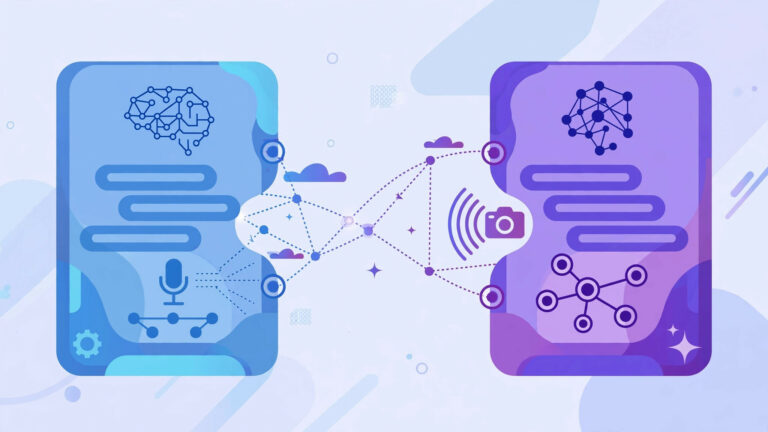
Two different products: dictation vs. ambient scribes
Medical dictation software (the classic category) turns a clinician’s dictated speech into text, usually with a medical vocabulary. The clinician still composes the note, by voice instead of typing, and reviews the result. Think of it as a faster keyboard.
AI ambient scribes listen to the patient encounter (with consent) and draft a structured clinical note, history, exam, assessment, plan, for the clinician to review and sign. They promise bigger time savings but raise bigger questions: consent, data handling, note accuracy, and how the draft integrates with your EHR.
Most small clinics should decide which category fits their workflow before comparing brands. A solo practitioner drowning in after-hours charting and a three-physician practice with a scribe budget have different answers.
What clinics should evaluate
- Medical vocabulary accuracy. General-purpose transcription mangles drug names, dosages, and anatomy. Medical-tuned engines exist for exactly this reason, test with real clinical dictation, not a demo script.
- EHR integration. A transcript that doesn’t flow into your EHR is just another window to copy-paste from. Check for real integration with your specific EHR, not “works with any EHR” marketing.
- Clinician review workflow. Every product here produces drafts requiring clinician review and sign-off. How fast is the review? Can you correct by voice? Friction here determines adoption.
- Consent and patient notice. Recording patient encounters has legal and ethical dimensions that vary by jurisdiction. Your workflow needs a clear consent process regardless of which tool you pick.
- Data handling. Where is audio processed? How long is it retained? Who can access it? Get answers in writing, and verify any compliance claims (HIPAA or otherwise) directly with the vendor. We make no compliance claims in this article.
- Total cost. Per-provider licensing, per-minute charges, implementation fees, model the real number for your practice size.
The best medical transcription software for clinics compared
| Tool | Free tier | Best for | Notable trade-off |
|---|---|---|---|
| Nuance Dragon Medical One | Trial via sales; check terms | Clinician dictation with medical vocabulary | Subscription per clinician; needs training time |
| DeepScribe | Demo; check terms | AI-drafted notes from encounters | Ambient recording raises consent/data questions |
| Abridge | Check current terms | Patient-visit note drafting | Verify EHR integration for your system |
| Ambience Healthcare | Demo; check terms | AI scribe positioned for health systems | Enterprise orientation; may not fit small clinics |
| Suki | Demo; check terms | Voice-assistant-style clinical documentation | Pricing and fit vary by practice size |
| Sunoh.ai (eClinicalWorks) | Check current terms | Practices already on eClinicalWorks | Tied to that EHR ecosystem |
We describe positioning only, verify every compliance, security, and integration claim directly with the vendor.
Tool-by-tool breakdown
Nuance Dragon Medical One
Dragon Medical One is the long-established name in clinical dictation: cloud-based speech recognition with a medical vocabulary, positioned as the standard for clinicians who dictate notes. Its strength is maturity, years of medical acoustic modeling and deep EHR integration work. The trade-offs are the classic ones: per-clinician subscription cost and a training period before accuracy peaks. It’s dictation, not an ambient scribe, the clinician still composes the note.
DeepScribe
DeepScribe represents the ambient scribe category: it captures the patient encounter and drafts a structured clinical note for review. The pitch is hours saved on documentation. The questions a clinic must answer before adopting: consent workflow, where encounter audio goes and how long it stays, accuracy on your specialty’s language, and EHR integration. Verify all of it with the vendor directly, we make no claims here.
Abridge
Abridge similarly drafts clinical notes from patient conversations, positioning itself around the visit experience for both clinician and patient. Same diligence applies: pilot it with your own encounters, measure the review-and-correction burden honestly, and confirm data-handling answers in writing before any PHI touches the system.
Ambience Healthcare
Ambience positions its AI scribe platform toward health systems and larger organizations. For a small clinic, the relevant question is fit: enterprise-oriented products can mean enterprise-oriented pricing, implementation, and support models. Worth a conversation if you’re part of a larger network; possibly heavy for an independent practice.
Suki
Suki takes a voice-assistant approach to clinical documentation, the clinician interacts by voice to create notes, pull up information, and complete documentation tasks. It’s a different interaction model from both dictation and ambient scribing, which some clinicians prefer. Evaluate pricing against your practice size and confirm EHR compatibility.
Sunoh.ai (eClinicalWorks)
Sunoh.ai is the ambient scribe offering associated with the eClinicalWorks EHR ecosystem. If your practice already runs on eClinicalWorks, the integration story is the draw, one vendor, one throat to choke. If you’re on a different EHR, it’s likely not your shortlist.
The diligence checklist (do this before any pilot)
- Involve compliance early. Your compliance officer or counsel should review the vendor’s data practices before a pilot, not after.
- Get compliance claims in writing. “HIPAA-compliant” is a claim about the vendor’s practices that you must verify, including whether a Business Associate Agreement (BAA) is offered and what it covers. We make no compliance claims in this article.
- Define the consent workflow. How and when patients are informed and consent to recording, per your jurisdiction’s requirements.
- Pilot with measurement. Track documentation time per encounter before and after, plus the correction burden. Vendor ROI claims are marketing; your numbers are evidence.
- Plan the exit. How do you get your data out, and how is it deleted, if you leave? Ask before you sign.
Where general transcription tools fit
Not everything in a clinic is a clinical note. Staff meetings, training sessions, patient-education videos, and administrative dictation don’t need medical vocabulary, a general transcription tool handles those fine and cheaply. Keep the expensive clinical products for clinical documentation and use general tools for everything else.
(Disclosure: TranscriptionAid is our own tool, a free browser-based transcription tool with timestamped output and SRT/VTT export, no signup, no server upload. It’s suited to general audio like meetings and training recordings, not to clinical documentation or anything involving PHI, which needs properly vetted clinical products.)
Frequently Asked Questions
Can I use a regular transcription app for clinical notes?
General transcription tools lack medical vocabulary and aren’t built for clinical workflows or PHI handling. For anything involving patient information, use products designed and vetted for clinical use, and verify their compliance claims directly with the vendor.
Do AI scribes replace the clinician’s review?
No. Every ambient scribe product produces a draft that the clinician must review, correct, and sign. The clinician remains responsible for the note’s accuracy. Measure the correction burden during your pilot, that’s the real cost.
How do patients feel about being recorded?
It varies, which is why a clear consent process matters. Many practices find acceptance is high when the purpose is explained (better notes, more face time), but you need a defined workflow including how to handle patients who decline.
What’s a BAA and do I need one?
A Business Associate Agreement is a contract required under HIPAA when a vendor handles PHI on your behalf. Whether you need one depends on your jurisdiction and what data the tool touches, your compliance counsel should make that call, not a software roundup.
How long does implementation take?
Dictation products can be running in days to weeks per clinician (plus the accuracy training period). Ambient scribes typically need a longer pilot: workflow redesign, consent processes, EHR integration, and staff training. Budget realistically.
Should a small clinic start with dictation or an ambient scribe?
If your main pain is “typing notes takes forever,” dictation is the lower-risk first step. If it’s “I’m charting until 9pm,” an ambient scribe pilot may be worth the diligence overhead. Many practices end up with both, used for different documentation tasks.
Conclusion
The best medical transcription software for clinics depends on which problem you’re solving: Nuance Dragon Medical One for clinician dictation with medical vocabulary, or an ambient scribe like DeepScribe, Abridge, or Suki for AI-drafted visit notes, each with real diligence required around consent, data handling, and EHR integration. Verify every compliance claim directly with the vendor, pilot with measurements, and keep the clinician’s review at the center of the workflow. And for the clinic’s non-clinical audio, meetings, training, admin, a free general tool like our browser-based TranscriptionAid handles it with no signup.