

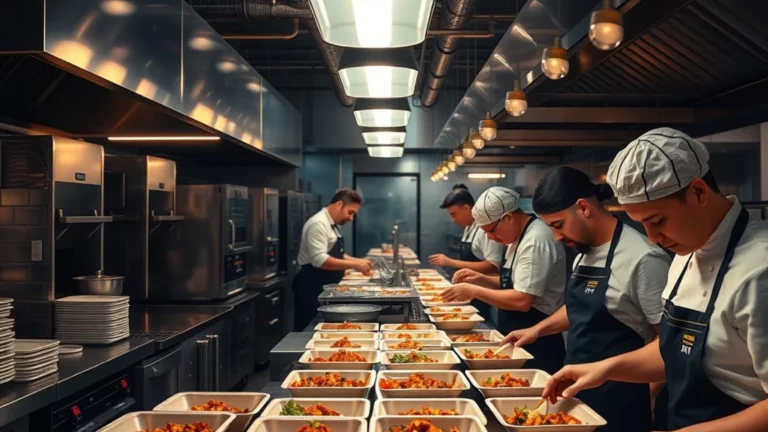
A cloud kitchen is a professional food preparation facility that operates exclusively for delivery and takeout orders, functioning without a storefront, dining area, or customer-facing service. By eliminating the high overhead costs of physical seating, these ghost kitchens maximize operational efficiency, allowing restaurant businesses to scale rapidly by focusing entirely on digital ordering platforms and third-party delivery logistics to serve customers directly at their homes or offices.
What Is a Cloud Kitchen?
A cloud kitchen is an industrial kitchen space designed to fulfill orders from third-party delivery apps like UberEats, DoorDash, or Grubhub, or through a restaurant’s own proprietary ordering platform. Because these spaces do not need to accommodate customers, they can be located in areas that would be unsuitable for a traditional restaurant—such as industrial parks or repurposed warehouse spaces where rent is significantly lower.The defining characteristic of this model is the absence of a front-of-house. There are no tables, no chairs, and no restrooms for patrons. Every square inch of the facility is dedicated to food preparation, storage, and packaging. This allows operators to run multiple brands out of a single kitchen, sharing equipment and staff to maximize output while minimizing fixed costs.
How the Cloud Kitchen Model Actually Works
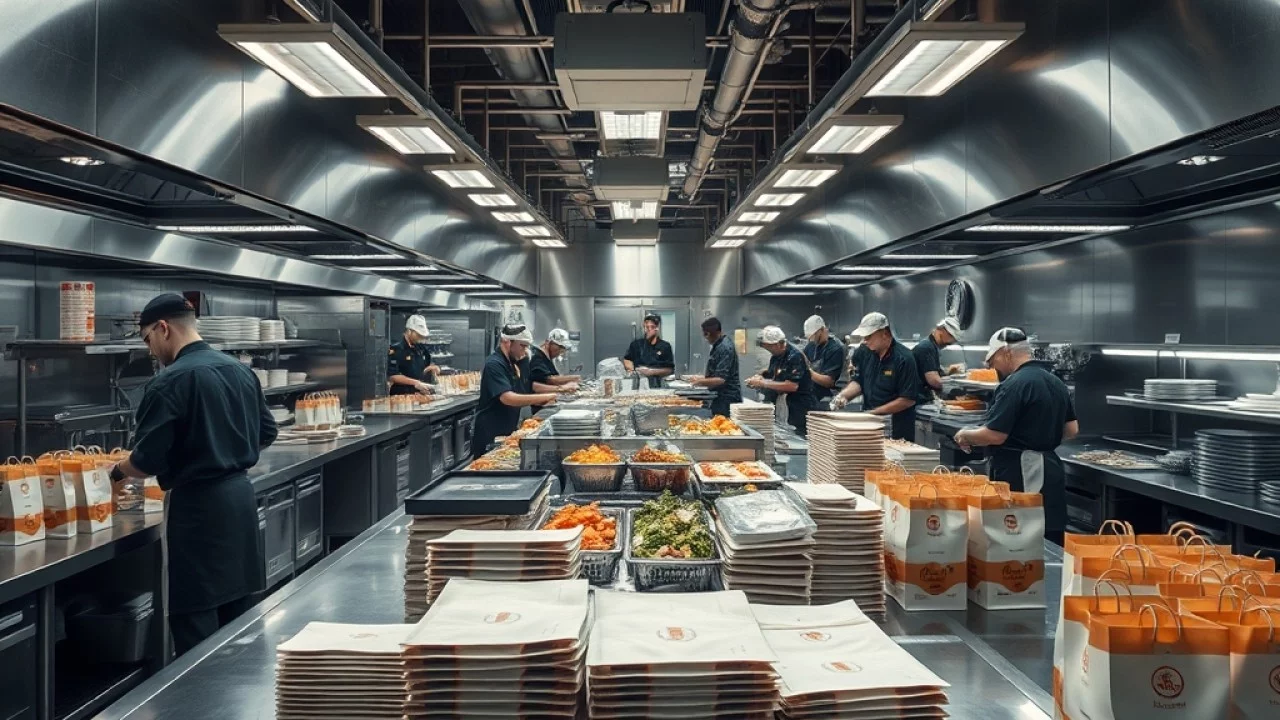
The operational flow of a cloud kitchen is built for speed and consistency. When a customer places an order via an app, it is routed directly to a tablet or a Kitchen Display System (KDS) within the facility. The kitchen staff prepares the meal, packages it for transport, and places it in a designated pickup zone.Delivery drivers then arrive at the facility, pick up the orders, and transport them to the customer. This process requires a highly streamlined workflow. Because there is no social interaction with diners, the quality of the product—and the speed at which it is delivered—becomes the only metrics that matter for customer satisfaction.Many cloud kitchen operators use a “hub-and-spoke” model. A central commissary kitchen handles the heavy prep work, such as chopping vegetables or marinating meats, which are then sent to smaller, satellite kitchens closer to high-density residential areas to complete the final assembly and cooking. This ensures that the food is always fresh and the delivery times are kept to an absolute minimum.
Why Restaurants Are Moving Away from Traditional Dining
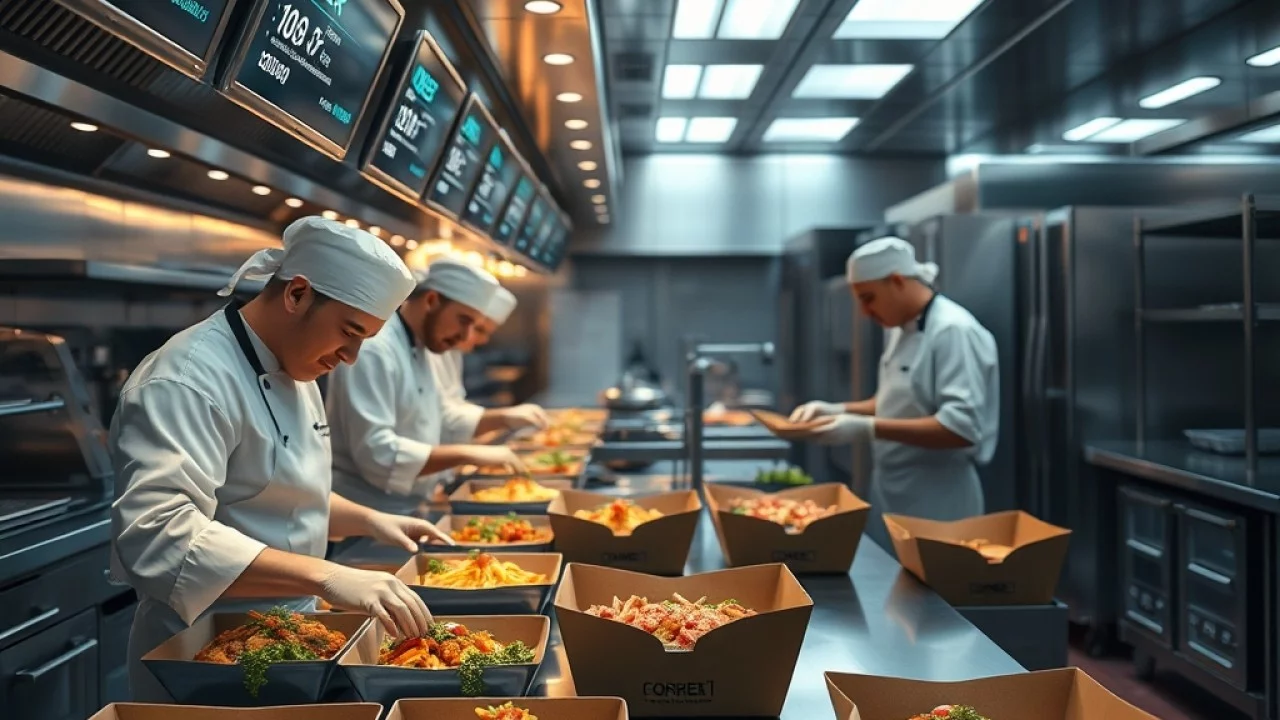
The traditional restaurant business is notoriously high-risk. High rent, staffing for the front-of-house, and the cost of maintaining a physical dining space consume a massive portion of revenue. For many operators, the cloud kitchen model offers a path to expansion with lower barriers to entry.First, the capital expenditure is much lower. You do not need to invest in interior design, furniture, or expensive signage. Second, the flexibility is unmatched. If a particular menu concept isn’t performing well, an operator can pivot to a new brand or menu entirely without having to rebrand a physical storefront. You can effectively run three or four different restaurants—a burger concept, a salad bar, and a taco shop—out of the same kitchen infrastructure.
The Financial Reality: Costs and Margins
While the elimination of front-of-house costs is a major advantage, cloud kitchens come with their own unique financial pressures. The biggest expense often shifts from rent to commissions paid to third-party delivery aggregators. These platforms can charge anywhere from 15% to 30% of the total order value, which can quickly erode profit margins.To succeed, operators must be masters of their unit economics. This means optimizing food costs, minimizing waste through precise inventory management, and ensuring that the labor cost per order is as low as possible. Many successful cloud kitchens use specialized software to track these metrics in real-time, allowing them to adjust their menus or pricing on the fly based on what is actually profitable.
Challenges Every Operator Should Anticipate
The most significant hurdle for a cloud kitchen is brand visibility. In a traditional restaurant, foot traffic and signage do the heavy lifting of marketing. In the digital world, you are competing for attention on a screen alongside hundreds of other options. You are essentially invisible unless you invest heavily in digital marketing and search optimization within delivery apps.Another challenge is the “last mile.” Even if your food is perfect when it leaves the kitchen, you have no control over what happens once the driver picks it up. If the food arrives cold or the packaging leaks, the customer blames the restaurant, not the driver. Investing in high-quality, thermal-insulated packaging is not optional—it is a critical part of the product itself.
Is a Cloud Kitchen Right for Your Business?
Transitioning to or starting a cloud kitchen is not a magic solution for restaurant profitability. It requires a different set of skills than running a traditional eatery. You are no longer in the hospitality business; you are in the logistics and manufacturing business.If you are an established restaurant, adding a virtual brand to your existing kitchen can be a great way to utilize your staff and equipment during slow hours. If you are a startup, the cloud kitchen model allows you to test concepts with minimal risk. However, you must be prepared to handle the complexities of digital marketing, delivery logistics, and the razor-thin margins that come with heavy reliance on third-party platforms.
Conclusion
The cloud kitchen is a natural evolution of the food industry in a world that prioritizes convenience and speed. It strips away the romanticism of the dining room and focuses entirely on the efficiency of the kitchen. While it offers a leaner, more agile way to operate, it demands a high level of operational discipline and a deep understanding of digital commerce.For those who can master the logistics and build a strong digital presence, the model offers a way to reach more customers than a single physical location ever could. Whether it remains a supplement to traditional dining or becomes the new standard, the cloud kitchen is clearly here to stay, reshaping our cities and our dinner tables one order at a time.
External Resources & Further Reading
For additional industry standards and official technical guidelines, explore the following trusted external resources:
Related Articles & Guides
Explore related technical guides and analysis from our publishing library: